

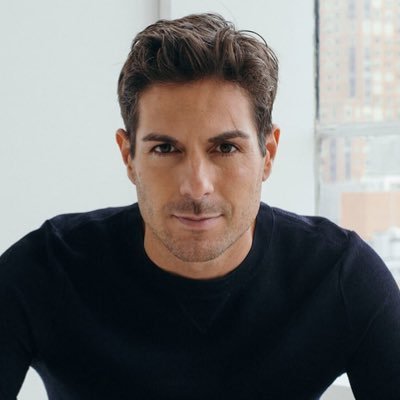
Health is based on three pillars: sleep, nutrition and fitness. I chat with some of the most interesting people I know to discover more about their Health Stacks: the behaviors and products they use to stay healthy and fit.
Recently, I had an hour-long Zoom conversation with Geoffrey Woo. Geoffrey is the Co-founder and Executive Chairman of H.V.M.N., a health-focused company that manufactures and sells products supporting a ketogenic diet, and nootropic supplements. I spoke with Geoffrey about where his interest in human enhancement came from and how he uses his body’s intuition to guide his health.
Highlights
-
Geoffrey’s interest in health and human enhancement began in 2013 after he sold his first company and went on to co-found H.V.M.N.
-
The three most important pillars of health for Geoffrey are nutrition, physical activity, and sleep
-
Geoffrey follows a ketogenic intermittent fasting strategy for his diet
-
Instead of rigorously tracking health KPIs, Geoffrey takes a more intuitive approach to his body and wellbeing
-
Introspection and intentionality are daily practices for Geoffrey
How I started my journey in health and human enhancement
I grew up in a suburb of Los Angeles, and have been a California kid my entire life. I come from an engineering, computer science background, and I apply an engineering-first mindset towards human performance and metabolism. I am fascinated with the limits of our physiology and metabolism both in terms of human enhancement, as well as how some of these techniques can also improve a lot of the chronic conditions facing our society today.
There were two main catalysts that started my interest in health. One was back in 2013 when I sold my first company, and had a little bit of time to just explore my intellectual interests. All of my smartest Stanford friends were working at the Googles and Facebooks of the world, essentially helping to target people with ads. I thought, people are making better robots, AI algorithms, and ML algorithms, why aren’t people trying to make better humans? That thought began an interesting deep dive into, “Hey, can I enhance myself?” I started off as a selfish endeavor. Then, I realized that there might be something possible there.
The second catalyst was the thought of working on the science fiction, transhumanist future as a cool mission. I remember playing all these cyberpunk video games as a middle-schooler where you could use bionic eyeballs and arms, and while that’s pretty Sci-fi, I think we’re just at the cusp where true human enhancement is possible.
“I started to wonder if we could build ‘better humans.’”
Then, my more recent interest and expansion into metabolism and physiology came from meeting and befriending elite performers. It became more of a challenge for myself personally to keep up with their level of fitness. I had always had a strong intellectual curiosity, but was never an elite athlete like them. After studying their lifestyles, I decided to prioritize fitness and health in my life, as well.
What matters most to me in health and wellbeing
I think of health in terms of three main pillars that affect us everyday – nutrition, activity, and sleep.
For nutrition and diet, I follow a ketogenic intermittent fasting strategy. Essentially, I ramp up or down my carbohydrate intake depending on my activity level. It’s similar to cyclical keto, and I use the dimension of either time, macronutrients, or types of food to control that metabolic state. When I think about diet, I optimize for a metabolic state of ketosis, versus restricting certain foods. If you want to get into the physiological metabolic state of ketosis, and you can use macros, time restriction, or exercise to get there. I will fast for probably six, seven days a week, and I’ll do a 16-18 hour intermittent fast. I usually have my first meal after noon, around 1-2 PM and I’ll have my last meal before 8:00 PM. In terms of measuring outputs from ketosis, I’ve been playing around with CGM for the last five years and then use pretty regular finger sticks. I use Keto-mojo or Freestyle Libre, or just finger stick, to measure ketones. I like dipping into ketosis, usually, I like to target achieving it at the end of my fasting period. I want to see at least 0.3, 0.4, 0.5 mmol/L ketones.
In terms of my nutrition, I eat everything. I primarily eat animal meat and seafood. I try to have a baseline low carbohydrate diet with pretty minimal carbohydrates unless I’m expecting to do a lot of workouts. If I know I’m just not able to exercise because I’m super busy at work, I’ll eat zero carbs, whereas if I know I have time to be active, I’ll up my carb intake. I eat steak and eggs pretty regularly.
“I usually try to do a workout soon after that first meal. I try to get in a workout at 3-4 PM while there’s a little bit of sun.”
For exercise, I like changing it up, but my gym reopened recently, so I want to get back to power Olympic lifting. I try to train 60-90 minutes every day. I do a lot of dynamic barbell movements because they provide a good mix of power and functional flexibility. Generally, I like to do a lot of bodyweight exercises and try to do some cardio, as well, such as long bike rides or hikes, but mainly I prefer more powerful, explosive movements.
The main movement I’m working on right now is the snatch and clean. It’s like a lift combined with a power clean. It involves multiple functional movements together, versus just a standard squat or bench press. Those are very good for targeting specific muscle groups, but less functional in terms of performing compound movements. I’m inspired by elite athletes, so I’m not just trying to target hypertrophy or getting big but rather trying to take a more functional and resilient approach to fitness. For example, if I need to climb over obstacles when I’m out hiking, or if I need to lift something, I’ll be able to do it. Earlier in the pandemic, I did murphs 45 days in a row, like a CrossFit workout, to change things up. Murphs involve a one mile run, 100 pull-ups, 200 push-ups, 300 squats, and a final one mile run.
I’m not a professional athlete, but when I want to push myself with activity, it becomes more of a ritual